Being in college right now, we’re constantly hammered over the head about plagiarism, plagiarism, plagiarism. And with good reason! Plagiarism is the deceitful practice of trading off someone’s work as your own and thus reaping the benefits from it.
I searched Google about the legalities behind tracing, the first result showed me this article by Kiffanie Stahle and it boils down to about three points according to Kiff:
“To decide a course of action, we’d talk through three things:
Is the source imagery protectable under the Copyright Act?
Did you copy the source imagery?
Did your copying rise to the level of an infringement?”
The article helps give further detail in breaking down these points to help you better understand, so if anyone else is in a similar position to you OR does trace and would like to know more about that, check out the rest of the article. It’s not too dense if you were expecting it to be some thick, legal jargon.
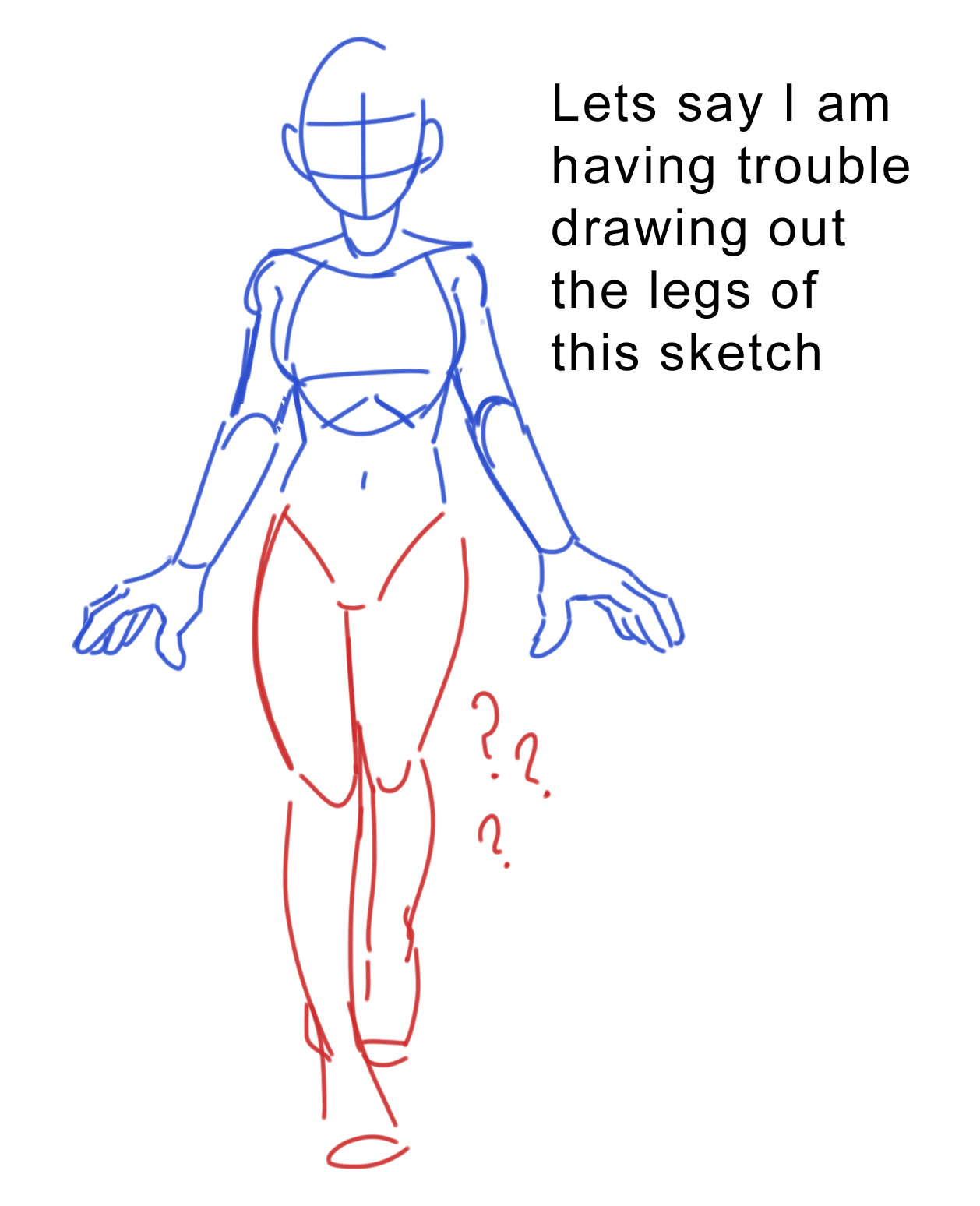
Coming back now to your specific situation though, here’s my personal hot take: it’s not plagiarizing. You said you already drew out the piece, and now you’re just having some trouble with the anatomy. So long as you’re not planning to redo the entire thing as one big tracing, I believe it would be safe to say you are allowed to correct your anatomy if you have a reference photo that can help.
Though before doing that!! I don’t know if this is the method you were planning to use, but I have a suggestion on how you can maybe go about this so that it A) is less direct tracing onto the picture and B) helps you to practice anatomy. I know it’s a bit tedious to do it this way, but I believe it will actually look more natural when implemented into your piece.
Have you seen this post before? Because it is an incredible practice that can help many folks who are just learning anatomy!
It is a very valid means of practicing and improving your anatomy. By trying to work backwards and break down the anatomy into more defined shapes that you can build from (I suggest using way more construction than I had so you can develop an even better understanding of the form) then you are gaining better knowledge of how to draw better!
In addition to this ask, there was another anonymous message received that I felt was similar to this one/was relevant to this ask too…
I think the answer to this lies within the three questions posed: “Is the source imagery protectable under the Copyright Act? Did you copy the source imagery? Did your copying rise to the level of an infringement?”
While I suggest to you to maybe perform the same method I demonstrated above (as yes, it can apply to gesture posing too!) I believe that you may want to just be careful of where the source comes from (to see what the copyright is on the images you are using),how much inspiration or tracing you plan to take away from the reference, and if you plan on merchandising the final product.
Everything was better when we thought it was a Galra mark.
Update: Now that I think about it, maybe it is a Galra mark, I don’t know, but my point is, I never thought this would be the way the mark/scar would appear.



 test
test 