
don’t save as jpeg
as a former yearbook editor and designer, let me explain this further
if youre only planning on posting your art online, them please save it as .png ;this is also better for transparencies as well
BUT
please, if youre planning of printing your art, NEVER use png. it makes the quality of the image pretty shitty. use jpeg or pdf instead. and always set your work at 300dpi to get a better printing quality – this means, the images are crisper and sharper and theres no slight blurriness. i had a talk with my friend who is currently taking design, and pdf is much better to use when youre working with a bigger publishing company because it still has the layers intact, but if youre only planning on printing your stuff at staples or at some small publishing store, the jpeg is the way to go.
this has been a public service announcement
I’ve replied to this once before but I see it’s doing the rounds again.
This is all utter bullshit.
I’m sorry but if your qualification is working on the school yearbook, you have no qualifications. Do not pretend otherwise. As a former professional photo manipulator for advertising brochures, I can say that you’re not comparing apples to oranges here – if anything, you’re comparing fruit to farmyard machinery:
- JPEG is a lossy format. It is suitable for web imagery because it sacrifices detail for reduced file sizes, but in doing so it introduces artifacts that weren’t in the original; if you load a JPEG for editing, then save it as a different JPEG, then you’re adding more artifacts formed from those first artifacts. Do this often enough and you end up with a horrid glitchy mess that looks like a puddle’s reflection after a stone’s been thrown in. You’ve seen those memes that have 3 or 4 different “found at” tags along the bottom, that look like fingerpainted copies of the original? That’s why.
- PNG is a lossless format that comes in two primary flavours, PNG-8 and PNG-24, which use 8 and 24 bit colour respectively. 8-bit colour is what you have in GIFs, a limit of just 256 different colours in a predetermined palette, usually automatically chosen by your software when saving. These files will look the same as GIFs, potentially with large patches of solid colour instead of the usual gradual shading seen in 24-bit imagery. This is usually better for small banners or pixel art, as it can yield smaller filesizes than GIF format. (There is an animated version called MNG but it has very little web support, hence the continued use of GIFs.)
- PNG-24 is great for larger images where detail is as important as colour depth, as well as printable RGB images and (if supported by the client) full colour images with gradient transparencies. It most certainly does not make “the quality of the image pretty shitty,” as it preserves every nuance. File sizes can be smaller than JPEG for small images, or significantly larger for large images.
- PDF is a container file, whatever you put into it will be pretty much preserved as it was, so you gain nothing but lose nothing.
- TIFF is what you need to be using for archival or print-quality imagery. It has support for multiple layers, multiple colour channels (RGB as well as CMYK, which is essential for accurate print rendering), and everything is preserved exactly as it was seen on-screen when being composed. There are compressed versions available, they use similar methods to PNG in order to maintain detail without sacrifice; next to whatever your graphics program uses natively, this is the most interchangeable format available for professional use.
- DPI is important only when used in combination with image dimensions; in and of itself it serves no purpose. If you make a brilliantly detailed 640×480 image & set it to 300dpi, you’ll receive a brilliantly detailed 2 inch x 1.6 inch print. This is great if you want to make a postage stamp, but not if you’re creating an A4 flyer! Determine the image’s dimension then set the DPI accordingly; 72dpi isn’t hideous especially for text-heavy work (it’s ~3 pixels per millimeter), and 150dpi can be suitable for many images. Unless you’re interested in photo realism, 300dpi is usually overkill – for our hypothetical A4 flyer, you’d need a file of 2490×3510 pixels for edge to edge printing, with a correspondingly high memory requirement and filesize even if using a compressed format.
- Keeping the layers intact is utterly unimportant for print work unless you want to use a separated colour print method that requires multiple passes to lay down each ink. If you send a file with all the layers, masks, etc. off for printing you’re liable to get it sent back unactioned, as they won’t want to take responsibility for choosing the wrong elements for printing. Save your work with everything intact, then save a flattened copy especially for printing purposes – this is one of the reasons Save Copy As… is a common option in graphics manipulation software.
This has been a Public Service Rebuttal.
FUCKING THANK YOU
As a designer who’s worked a few years for a newspaper, I cannot begin to tell you how much OP’s post (edit: response, technically) made me cringe. I would have killed to get a photo as a TIFF for once instead of having to tear apart PDFs only to find a 50x100px 72dpi shitty JPEG inside for the 5 millionth time…
JPEG and PNG are best suited for web formats (and it is perfectly fine to save your web version as JPEG, that’s what it’s goddamn for). You will make a designer cry if you send a web-safe JPEG for print, however. And if you have a vectorized logo saved as EPS (or even better, AI), you will make that designer’s year.
Tag: art help
Okay I’m probably way misinterpreting here, but when I see those posts that say that writers should get paid because it’s hard work and takes a really long time and the person needs to be really dedicated (which I totally agree with, btw) I start to think that I have no right to even try writing because people are bothered by the idea that “everyone thinks they can write” and me wanting to share my fandom ideas through writing, since I can’t draw, is not a compelling enough reason for me to try.
Hey! so yeah I’ve been seeing that around too, but I guess that’s not the way I interpret it. If you want to write and work at it and dedicate the time and effort to learning and finding your own style then that’s AMAZING! DO IT!
What I think all of the “everyone thinks they can write” stuff is saying is that people believe that they can just create a story and write it down and it’ll be brilliant without any work required. It’s the idea that writing a full fanfic or a novel or anything can be done by anyone, not just the people who have worked at and practiced the craft. It’s the idea that any old Jo-shmo can create an incredible novel by pulling it from his ass. That is the “everyone thinks they can write” idea. (In my mind.)
So I say do NOT let what’s floating around discourage you! You have to start somewhere. And you want to do it, you want to work at it. You are not Jo-shmo. So, my friend, WRITE ON!
This is really helpful and makes so much sense. Thank you for this!!
You are so very welcome! Never think that whenever you want to work at something and learn that it is a bad unneeded thing. I know how easy it is as a creator to be discouraged, but just persevere. Push on and do your thing and you will be brilliant. 🙂


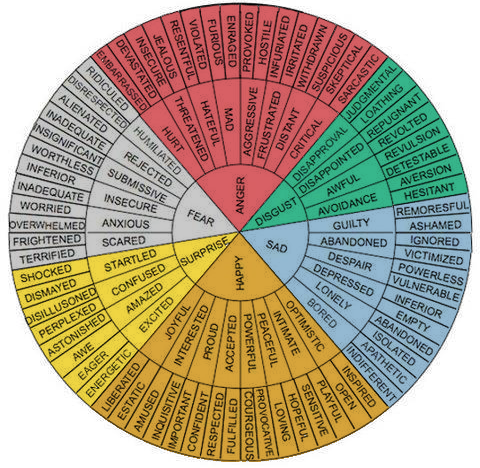
Hello do you have an advice on writing an angsty fic or sick fic? I’m terrible at writing dialogue do you have any tip’s?
Hello! Thank you for your question! So angst in and of itself is a huuuuge category and sick fic kinda falls under it a lot. I will do my best at keeping to a few main points on angst that I hope help and if you have more questions related specifically to sick fic let me know!
1. What’s the Sitch? a.k.a.
Know Your Story
I know this sounds stupid and self evident since you’re the one writing, but you have to think about what kind of angst situation your characters are in. Angst is caused in different ways and by different things. Sometimes it’s an outside factor affecting the relationship like a chronic illness* or a character being fired and sometimes it’s an inside factor like a character withholding information from the other or a miscommunication. Characters will respond differently to their significant other having cancer than to there being miscommunication between them. Hell, sometimes it’s a combination. Maybe one of them lost their job and isn’t telling their partner. But as an author knowing exactly what the problem is stemming from and how each character feels about it is very important. Which leads to the next tip.
*If you decide to go with something like an injury or chronic illness, do your research. The better informed you are about how people in real life in these situations feel, the problems they face, and how people who support them keep going the more realistic your story is.
2. Feels? What feels?
a.k.a. Know Your Characters
Another “Of course I know my characters, it’s my story.” But just take a second. This is important for dialogue (or lack there of). Think about what kind of character you have. You’ve now fully mapped out your situation, how does each character react in that situation with what they know? Are they anxious? Are they suspicious? Are they the type to accuse? Do they try to console? Do they try to block everything out and ignore the problem? There are so many different feelings that can contribute to angst in a story, especially when miscommunicated or gone unnoticed. Angst tends to be an emotional cocktail. Figure out what each of your characters is feeling and how this makes them act. This influences dialogue. Some characters when emotional may spill their guts while others may not say anything at all. One character might say everything when they’re nervous, but nothing if they’re depressed. Are your characters yelling at each other? Or is only one character yelling at the other?
3. Build it Up
Yes, feelings can happen split second, but angst isn’t one. It’s a slow building feeling of anxiety and fear. It’s tension. A rubber band being pulled and pulled, stretching, getting more taught until it snaps. You pull the rubber band with characters’ actions. There’s usually something not being said, or some underlying truth that both characters don’t want to talk about or that one character does, while the other doesn’t. The feelings build and that makes the moment when the tension snaps that much more powerful.
4. Describe
Describe, describe, describe. In angst describing feelings goes a really long way. Words caught in someone’s throat that they can’t get out hurt more than ones that would completely resolve the situation. Also describing the characters emotional state helps. Is one stuck in their head so much that they talk themselves out of what is actually the case? Describe that. Is a character second guessing themselves at every turn? Describe it. Does a character have tells on their anxiety that the other doesn’t notice, or does notice? DESCRIBE IT! Even if you’re in the other characters POV give the reader body language clues to what’s going on in the others head. They could be saying the opposite of what they feel, but the reader should have a clue that they are even if the character that they’re talking to doesn’t. Dialogue with double meaning where one character is trying to say something but the other misinterprets requires this.
5. Don’t make it overly dramatic
Yes, angst is dramatic and it makes for high tensions sometimes, but remember that you don’t have to have people gasping and yelling and fainting left and right. Sometimes really soft subtle things make you feel far more than the big ones. For example if a couple is having a communication problem and one tries to reach out but the other dismisses it, it hurts more if your character withdraws (unless they’re the type to lash out). Just remember that little things hurt, not just big things.
On the note of dialogue, I think something very important to think about is why is your character saying what they’re saying? What’s the purpose of it? What is your end goal? Even casual conversations are important, they give pieces of information away about characters, setting, and story. Also think about how people talk. Read your dialogue out loud if it helps. Is it natural sounding or are you tripping up on the words? What kind of slang do your characters use? And let the dialogue speak for itself, your readers are smart. they can draw connections, you don’t have to go into their heads and describe exactly why they say things.
Sorry, that turned into a monster, hehe. I hope that in some way, shape, or form helped. Thank you so much for the ask!
Things I Try to Remember When I’m Nervous About Writing
1. Write what you want to read.
2. There is no problem with a story so great that it cannot be fixed in revision. Keep going.
3. If your story is as uncreative as you think it is, you wouldn’t want to write it so badly. You want to write it because there’s a unique spin on it you have never seen, and want to express. Many people may write similar stories, but it’s the details that make it personal. You may not know it now, but there is someone who is looking for exactly what you’re writing. If you don’t finish it, they’ll never see it.
4. You can write something amazing and still be met with silence. There are myriad reasons for this that have nothing to do with the quality of what you produce.
4.1 It’s okay to repeat post your work if no one has seen it.
4.2 It’s okay to post your work in multiple places.
5. You don’t have to agree with every criticism (but take it gracefully anyway).
6. Most writers are scared of the same things you are.
7. Don’t judge your works in progress against the archives of finished, polished stories other writers have put together. Archives are Internet portfolios and generally don’t show all the multitude of failures, incomplete, and draft-form works those writers are also struggling with. They aren’t perfect and you don’t have to be, either. Keep working and you will have a portfolio of your own.
8. Don’t be afraid to share your ideas with other writers. It’s not annoying as long as you’re not self-important about it. Be humble and gracious, and others will reciprocate.
8.1 You can’t write as well in a vacuum; the more people know that you are working on something, and what, the more support you will get for that work. Starting a dialogue before you post something will make it more likely people will read it when you do post it.
9. It’s okay to take breaks. If the ideas just aren’t coming, go do something else for a while.
10. Be kind to yourself. Don’t call yourself names. You are not a failure, or uncreative, or boring. You wouldn’t call other people those things, so don’t do it to yourself.
I don’t know if these are helpful to other people, but they are helpful to me, so just in case, here they are!


Some quick art tips,
- Always eat before you ink or line so you don’t get the shakes
- Always have a water bottle
- Try sketching with no or extremely low stabilizer.
- Okay but no seriously love yourself and eat before you line and drink
- Do wrist exercises https://www.youtube.com/watch?v=hUyMNyrOHJQ (I like these)
- Don’t hurt yourself seriously messing yourself up isn’t going to improve your art
- Do thumbnails, especially for comics.
- Practice and have fun with your practice! Don’t let art become a chore!!
- Use reference!
- Experiment, and play with different styles
- Your style will come to you, I promise.
- Have fun, and take care of yourself
Writing advice you’re not going to like.
People sometimes send me Asks wanting writing advice. I suck at it. I don’t really know how I do the writing, or how one should do the writing, or what one should do to get better at the writing. All I can ever think to say is “write a lot of stuff and you will get better at the writing.” Which is true, but hardly a bolt from the sky.
Well, as it turns out, I do have one piece of Legit Writing Advice, and I am going to share it with you, right now. If you were in any of my writing workshop groups at a con, you’ve heard this advice already.
Warning: you’re going to fucking hate it. But if you do it, you will thank me.
If you have a piece of fiction you’re serious about, something you might want to actually shop around, or just something you really are into and want to make it as good as you can…do NOT edit it.
Repeat. DO NOT EDIT.
REWRITE.
As in, print out the whole fucking thing and re-enter it, every word (or use two screens). Retype the whole thing. Recreate it from the ground up using your first draft as a template. Start with a blank page and re-enter every. single. word.
I hear you screaming. OH MY GOD THAT’S INSANE.
Yes. Yes, it is.
It is also the most powerful thing you will ever do for a piece of fiction that you are serious about.
Now, let’s get real. I don’t do this for most things. I don’t do it for my fanfiction. But if it’s something original, something I might like to get to a professional level – I do it. You absolutely COULD do it for fanfiction. It’s just up to you and how much time you want to sink into a piece.
You can edit, sure. But you WILL NOT get down to the level of change that needs to happen in a second draft. You will let things slide. Your eyes will miss things. You will say “eh, good enough.”
The first time I did this, on someone else’s advice, I was dubious. Within two pages, I was saying WHY HAVE I NOT BEEN DOING THIS ALL THE TIME. I was amazed at how much change was happening. By the time I got to the end, I had an entirely different novel than the one I’d started with. When you’re already re-entering every single word, it’s easy to make deep changes. You’ll reformat sentences, you’ll switch phrases around, you’ll massage your word choice. You’ll discover whole paragraphs that don’t need to be there at all because they became redundant. You’ll find dialogue exchanges that need reimagining. Whole plot points will suddenly be different, whole story arcs will reveal their flaws and get re-drawn.
You cannot get down to the fundamental level of change that’s required just by editing an existing document. You have to rebuild it if you really want your story to evolve. You will be AMAZED at the difference it will make.
It will take time. It will seem like a huge, Herculean task. I’m not saying it’s easy. It isn’t. But it is absolutely revolutionary.
Try it. I promise, you will see what I mean.
*PSA: Tipsy!Lori wrote this post. In case you couldn’t tell.
maybe i should try this with my comic scripts.
This advice is real.
I reblogged this earlier on kind of a “that sounds interesting. might work, might not, can’t see it being drastically different but whatever I should try.” kind of note
I’ve got a short story due today at 5, so I decided to do this and completely rewrite the first draft.
OH. MY GOD.
This is legitimate. It’s let me completely gut scenes I was unhappy with, rewrite them entirely differently and not feel any loyalty to what I used to have.
It’s taking a long time. It’s a commitment. But heck so is writing.
This is great. Do this. It’s amazing.
This is such good advice. I’ve done it a few times, and it completely transforms your work. It’s a time consuming process, but it’s absolutely worth the investment. I highly recommend this on things you truly care about. It’s incredible.
I was going to be like “this is ridiculous, what an unreasonable standard” and then go off in a huff to work on an article, and then I remembered that the way I write articles now is by doing an audio draft, and then basically rewriting the article entirely while listening to the audio draft… so… yeah. This is probably actually really good advice. >_>
This sucks. It really does. I’ve done it. However, it is so powerful. By going back through your writing and rewriting it word for word, you pick up on small things that you may have missed before.
 test
test 