Day 1: On the first day, God created “warum”.
Day 2: On the second day, God created “wieso”.
Day 3: On the third day, God created “wozu”.
Day 4: On the fourth day, God created “wofür”.
Day 5: On the fifth day, God created “weshalb”.
Day 6: On the sixth day, God created “weswegen”.
Day 7: On the seventh day, after being satisfied with his creation of SIX different ways of saying WHY, with pretty much the same meaning, God rested.
“This,” he said, “is a sentence split by a speech tag.”
“This is a full sentence,” she said. “This is a new sentence.”
“This is a sentence followed by an action.” He smiled. “They’re separate sentences, because I didn’t speak by smiling.”
We need an extended post covering ALL sentences.
*cracks knuckles*
(anyone, feel free to correct me if I’ve made any errors, and add your own!)
“This is a phrase”—she was glaring at the computer—”she wrote while glaring at the computer.”
“This phrase—” she paused, pointing at the computer “—she broke up with an action.”
She began, “I can’t believe that you would—” “—finish other people’s sentences?” he finished.
“It is generally not possible to walk a sentence,” she said, walking, “so you can’t write a sentence that goes, ‘Blah blah blah, he walked.’ You need to start it as a different sentence or phrase, as with the final OP example or, in fact, this one. “Also, at least in American punctuation practices, single quotes are used when quoting something in dialogue. In British punctuation, it’s the other way around. (At least that I’m aware of). “Also, also, notice that in multi-paragraph quotes, you don’t put an end-quote at the end of a paragraph unless it’s the final one. It is understood that each paragraph is still the same speaker.”
“Just because you end a quote in an exclamation point or question mark doesn’t mean you capitalize the dialogue tag after the fact!?” he blurted.
“Not all dialogue needs dialogue tags so long as you know who is speaking!” “Can you sometimes know who is speaking just by turn-of-phrase, subject matter, and names used?” “Yes, other person in the scene. You can.”
It is highly dependent on publisher and personal preference, he thought, but various types of internal monologues and memories, etc, may be italicized. But they don’t have to be italicized, she mused. And to that, she said to herself, ‘Sometimes thoughts or memories or telepathic speech are even written with single or double quotes, but must be differentiated between actual dialogue somehow, such as italic text.’
And guess what? he said. Some books don’t even use quotation marks
when people say things. It’s rare, but when done well, is an effective
style of story-telling. Really? Really.
an edible cracker with just one side. mathematically impossible and yet here I am monching on it.
‘scuit’ comes from the french word for ‘bake’, ‘cuire’ as bastardized by adoption by the brittish and a few hundred years
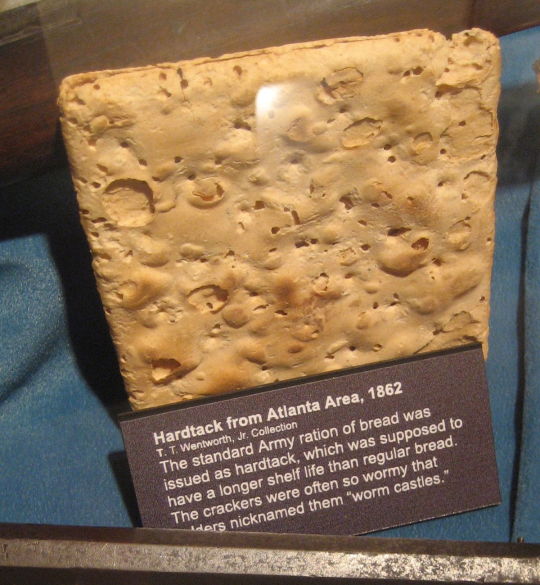
‘biscuit’ meant ‘twice-baked’, originally meaning items like hardtack which were double baked to dry them as a preservative measure long before things like sugar and butter were introduced. if you see a historical doccument use the word ‘biscuit’ do not be fooled to think ‘being a pirate mustve been pretty cool, they ate nothing but cookies’ – they were made of misery to last long enough to be used in museum displays or as paving stones
‘triscuit’ is toasted after the normal biscuit process, thrice baked
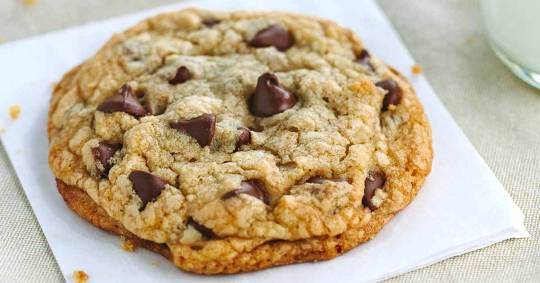
thus the monoscuit is a cookie thats soft and chewy because it was only baked once, not twice
behold the monoscuit/scuit
Why is this called a biscuit:
when brittish colonists settled in the americas they no longer had to preserve biscuits for storage or sea voyages so instead baked them once and left them soft, often with buttermilk or whey to convert cheap staples/byproducts into filling items to bulk out the meal to make a small amount of greasy meat feed a whole family. considering hardtack biscuits were typically eaten by dipping them in grease or gravy untill they became soft enough to eat without breaking a tooth this was a pretty short leap of ‘just dont make them rock hard if im not baking for the army’ but didnt drop the name because its been used for centuries and people forgot its french for ‘twice baked’ back in the tudor era, biscuit was just a lump of cooked dough that wasnt leavened bread as far as they cared
thus the buttermilk biscuit and the hardtack biscuit existed at the same time. ‘cookies’ then came to america via german and dutch immigrants as tiny cakes made with butter, sugar/molasses, and eggs before ‘tea biscuits’ as england knew them due to the new availability of cheap sugar- which is why ‘biscuit’ and ‘cookie’ are separate items in america but the same item in the UK
the evolution of the biscuit has forks on its family tree
an edible cracker with just one side. mathematically impossible and yet here I am monching on it.
‘scuit’ comes from the french word for ‘bake’, ‘cuire’ as bastardized by adoption by the brittish and a few hundred years
‘biscuit’ meant ‘twice-baked’, originally meaning items like hardtack which were double baked to dry them as a preservative measure long before things like sugar and butter were introduced. if you see a historical doccument use the word ‘biscuit’ do not be fooled to think ‘being a pirate mustve been pretty cool, they ate nothing but cookies’ – they were made of misery to last long enough to be used in museum displays or as paving stones
‘triscuit’ is toasted after the normal biscuit process, thrice baked
thus the monoscuit is a cookie thats soft and chewy because it was only baked once, not twice
behold the monoscuit/scuit
Why is this called a biscuit:
when brittish colonists settled in the americas they no longer had to preserve biscuits for storage or sea voyages so instead baked them once and left them soft, often with buttermilk or whey to convert cheap staples/byproducts into filling items to bulk out the meal to make a small amount of greasy meat feed a whole family. considering hardtack biscuits were typically eaten by dipping them in grease or gravy untill they became soft enough to eat without breaking a tooth this was a pretty short leap of ‘just dont make them rock hard if im not baking for the army’ but didnt drop the name because its been used for centuries and people forgot its french for ‘twice baked’ back in the tudor era, biscuit was just a lump of cooked dough that wasnt leavened bread as far as they cared
thus the buttermilk biscuit and the hardtack biscuit existed at the same time. ‘cookies’ then came to america via german and dutch immigrants as tiny cakes made with butter, sugar/molasses, and eggs before ‘tea biscuits’ as england knew them due to the new availability of cheap sugar- which is why ‘biscuit’ and ‘cookie’ are separate items in america but the same item in the UK
the evolution of the biscuit has forks on its family tree
“everything is in its place”; it means far more than simply preparing a tray of diced shallots and garlic, assembling pots, preheating the oven, or setting up a medley of chopped herbs — it is one’s state of mind, one’s understanding that fosters a mirepoix of inspiration, efficiency, and trust.
While its use in the kitchen is undeniably vital, therein lies an exquisite philosophy meant to be embraced in all aspects of life and love.
With everything — and everyone — laid out in place, one will find the joy in daily rituals and seek comfort in the mundane.




 test
test 