there’s going to be a difference sometimes between the stories that you find masterfully crafted and the stories that mean a lot to you personally and those two things don’t have to overlap completely or even at all to make that story worthwhile
and that’s a good thing to remember as a reader/viewer/etc but also as a writer because even if whatever you ultimately write is full of mistakes, someone out there is gonna take it so to heart that it fundamentally changes them as a person. and that is. Huge.
Like! I made a list of the top ten stories that have influenced me as a human being and only 2 or maybe 3 of them are things I would hold up as examples of narrative mastery. But I cannot imagine who I would be without the other 7!!
Please write your story and share it with the world! Someday someone will not be able to imagine a world without your story in it and they’ll be so grateful you brought that wonderful, meaningful thing into their life
Also while I’m on a roll, a story doesn’t have to have some deep hidden meaning or philosophical theme for it to be meaningful. Sometimes a story is meaningful to someone because it was fun and made them happy at a time when they really, really needed that. Or because it was an incredibly intriguing world that inspired them to dream. Maybe they’re another writer, and they see in that thing you wrote the exact kind of story they want to tell someday.
The Closer Look: While this channel is primarily dedicated to the story telling in movies that doesn’t mean you can’t translate a lot of these story telling mechanics into writing. The video in the link covers how to make a compelling villain with one of my favorite villains of the DC Universe, so give them a look.
Extra Credits: Just like the last entry, this one doesn’t have much to do with writing novels or fiction. Rather, Extra Credits covers game design a lot of the time. But they also cover how to write the stories for those games and offer some interesting insight. Couple this with their other segments Extra Sci Fi and Extra History, and you have the makings of an amazing tool kit for writers of any medium.
Overly Sarcastic Productions: There is not enough praise I can throw at this channel. Anything from Trope Talk to Miscellaneous Myths and even Classics Summarized is able offer something to even the most seasoned writer. Just like Extra Credits too, they also cover a bunch of historical stuff too. Which, as a history buff myself, is always a plus.
Tale Foundry: By now, i’m sure you’ve gotten the theme. All of these channels are amazing, but this one is more writing focused then the rest thus far. The channel dedicates itself to taking a closer look at genera and sub-genera and the big players therein. It gives the audience a chance to take a look at these things under the microscope for an easier means of dissection for their own work.
Hello Future Me: I found this channel when I was scrolling through YouTube randomly and found their video on Writing a Hard Magic Systemand it gave me plenty of food for thought on the fantasy novel I was working on. They go on to cover a Soft Magic Systemwhich was able to really draw the line in black and white as to the difference between the two. From there, the channel has been able to offer a few good videos on matters of writing fiction and one that comes with a recommendation for me.
PlagueOfGripes: This one, you’ll need to take with a grain of salt as the host is a little rough around the edges. While he primarily covers art streams and other shenanigans like that, he did a three part video essay on writing that had quite a bit to teach. I personally found his cynical nature to be charming and funny, but if that isn’t your thing, maybe pass him by just this once.
All the links to the channels are located in their respective titles.
catch of breath, choke, gulp, heave, inhale, pant, puff, snort, wheeze, huff, rasp, sharp intake of air, short of breath, struggle for breath, swallow, winded
Hello! Thank you for your question! So angst in and of itself is a huuuuge category and sick fic kinda falls under it a lot. I will do my best at keeping to a few main points on angst that I hope help and if you have more questions related specifically to sick fic let me know!
1.What’s the Sitch? a.k.a.
Know Your Story
I know this sounds stupid and self evident since you’re the one writing, but you have to think about what kind of angst situation your characters are in. Angst is caused in different ways and by different things. Sometimes it’s an outside factor affecting the relationship like a chronic illness* or a character being fired and sometimes it’s an inside factor like a character withholding information from the other or a miscommunication. Characters will respond differently to their significant other having cancer than to there being miscommunication between them. Hell, sometimes it’s a combination. Maybe one of them lost their job and isn’t telling their partner. But as an author knowing exactly what the problem is stemming from and how each character feels about it is very important. Which leads to the next tip.
*If you decide to go with something like an injury or chronic illness, do your research. The better informed you are about how people in real life in these situations feel, the problems they face, and how people who support them keep going the more realistic your story is.
2. Feels? What feels?
a.k.a. Know Your Characters
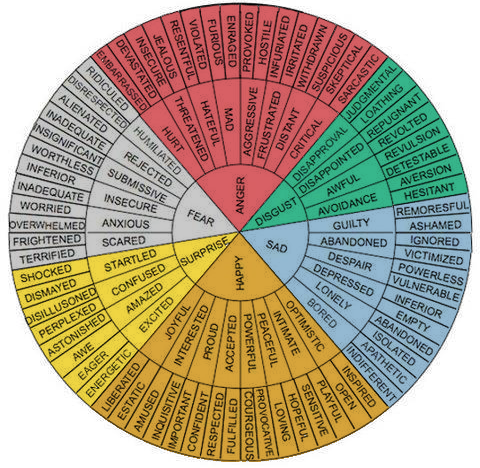
Another “Of course I know my characters, it’s my story.” But just take a second. This is important for dialogue (or lack there of). Think about what kind of character you have. You’ve now fully mapped out your situation, how does each character react in that situation with what they know? Are they anxious? Are they suspicious? Are they the type to accuse? Do they try to console? Do they try to block everything out and ignore the problem? There are so many different feelings that can contribute to angst in a story, especially when miscommunicated or gone unnoticed. Angst tends to be an emotional cocktail. Figure out what each of your characters is feeling and how this makes them act. This influences dialogue. Some characters when emotional may spill their guts while others may not say anything at all. One character might say everything when they’re nervous, but nothing if they’re depressed. Are your characters yelling at each other? Or is only one character yelling at the other?
3. Build it Up
Yes, feelings can happen split second, but angst isn’t one. It’s a slow building feeling of anxiety and fear. It’s tension. A rubber band being pulled and pulled, stretching, getting more taught until it snaps. You pull the rubber band with characters’ actions. There’s usually something not being said, or some underlying truth that both characters don’t want to talk about or that one character does, while the other doesn’t. The feelings build and that makes the moment when the tension snaps that much more powerful.
4. Describe
Describe, describe, describe. In angst describing feelings goes a really long way. Words caught in someone’s throat that they can’t get out hurt more than ones that would completely resolve the situation. Also describing the characters emotional state helps. Is one stuck in their head so much that they talk themselves out of what is actually the case? Describe that. Is a character second guessing themselves at every turn? Describe it. Does a character have tells on their anxiety that the other doesn’t notice, or does notice? DESCRIBE IT! Even if you’re in the other characters POV give the reader body language clues to what’s going on in the others head. They could be saying the opposite of what they feel, but the reader should have a clue that they are even if the character that they’re talking to doesn’t. Dialogue with double meaning where one character is trying to say something but the other misinterprets requires this.
5. Don’t make it overly dramatic
Yes, angst is dramatic and it makes for high tensions sometimes, but remember that you don’t have to have people gasping and yelling and fainting left and right. Sometimes really soft subtle things make you feel far more than the big ones. For example if a couple is having a communication problem and one tries to reach out but the other dismisses it, it hurts more if your character withdraws (unless they’re the type to lash out). Just remember that little things hurt, not just big things.
On the note of dialogue, I think something very important to think about iswhy is your character saying what they’re saying? What’s the purpose of it? What is your end goal? Even casual conversations are important, they give pieces of information away about characters, setting, and story. Also think about how people talk. Read your dialogue out loud if it helps. Is it natural sounding or are you tripping up on the words? What kind of slang do your characters use? And let the dialogue speak for itself, your readers are smart. they can draw connections, you don’t have to go into their heads and describe exactly why they say things.
Sorry, that turned into a monster, hehe. I hope that in some way, shape, or form helped. Thank you so much for the ask!
2. There is no problem with a story so great that it cannot be fixed in revision. Keep going.
3. If your story is as uncreative as you think it is, you wouldn’t want to write it so badly. You want to write it because there’s a unique spin on it you have never seen, and want to express. Many people may write similar stories, but it’s the details that make it personal. You may not know it now, but there is someone who is looking for exactly what you’re writing. If you don’t finish it, they’ll never see it.
4. You can write something amazing and still be met with silence. There are myriad reasons for this that have nothing to do with the quality of what you produce.
4.1 It’s okay to repeat post your work if no one has seen it.
4.2 It’s okay to post your work in multiple places.
5. You don’t have to agree with every criticism (but take it gracefully anyway).
6. Most writers are scared of the same things you are.
7. Don’t judge your works in progress against the archives of finished, polished stories other writers have put together. Archives are Internet portfolios and generally don’t show all the multitude of failures, incomplete, and draft-form works those writers are also struggling with. They aren’t perfect and you don’t have to be, either. Keep working and you will have a portfolio of your own.
8. Don’t be afraid to share your ideas with other writers. It’s not annoying as long as you’re not self-important about it. Be humble and gracious, and others will reciprocate.
8.1 You can’t write as well in a vacuum; the more people know that you are working on something, and what, the more support you will get for that work. Starting a dialogue before you post something will make it more likely people will read it when you do post it.
9. It’s okay to take breaks. If the ideas just aren’t coming, go do something else for a while.
10. Be kind to yourself. Don’t call yourself names. You are not a failure, or uncreative, or boring. You wouldn’t call other people those things, so don’t do it to yourself.
I don’t know if these are helpful to other people, but they are helpful to me, so just in case, here they are!
People sometimes send me Asks wanting writing advice. I suck at it. I don’t really know how I do the writing, or how one should do the writing, or what one should do to get better at the writing. All I can ever think to say is “write a lot of stuff and you will get better at the writing.” Which is true, but hardly a bolt from the sky.
Well, as it turns out, I do have one piece of Legit Writing Advice, and I am going to share it with you, right now. If you were in any of my writing workshop groups at a con, you’ve heard this advice already.
Warning: you’re going to fucking hate it. But if you do it, you will thank me.
If you have a piece of fiction you’re serious about, something you might want to actually shop around, or just something you really are into and want to make it as good as you can…do NOT edit it.
Repeat. DO NOT EDIT.
REWRITE.
As in, print out the whole fucking thing and re-enter it, every word (or use two screens). Retype the whole thing. Recreate it from the ground up using your first draft as a template. Start with a blank page and re-enter every. single. word.
I hear you screaming. OH MY GOD THAT’S INSANE.
Yes. Yes, it is.
It is also the most powerful thing you will ever do for a piece of fiction that you are serious about.
Now, let’s get real. I don’t do this for most things. I don’t do it for my fanfiction. But if it’s something original, something I might like to get to a professional level – I do it. You absolutely COULD do it for fanfiction. It’s just up to you and how much time you want to sink into a piece.
You can edit, sure. But you WILL NOT get down to the level of change that needs to happen in a second draft. You will let things slide. Your eyes will miss things. You will say “eh, good enough.”
The first time I did this, on someone else’s advice, I was dubious. Within two pages, I was saying WHY HAVE I NOT BEEN DOING THIS ALL THE TIME. I was amazed at how much change was happening. By the time I got to the end, I had an entirely different novel than the one I’d started with. When you’re already re-entering every single word, it’s easy to make deep changes. You’ll reformat sentences, you’ll switch phrases around, you’ll massage your word choice. You’ll discover whole paragraphs that don’t need to be there at all because they became redundant. You’ll find dialogue exchanges that need reimagining. Whole plot points will suddenly be different, whole story arcs will reveal their flaws and get re-drawn.
You cannot get down to the fundamental level of change that’s required just by editing an existing document. You have to rebuild it if you really want your story to evolve. You will be AMAZED at the difference it will make.
It will take time. It will seem like a huge, Herculean task. I’m not saying it’s easy. It isn’t. But it is absolutely revolutionary.
Try it. I promise, you will see what I mean.
*PSA: Tipsy!Lori wrote this post. In case you couldn’t tell.
maybe i should try this with my comic scripts.
This advice is real.
I reblogged this earlier on kind of a “that sounds interesting. might work, might not, can’t see it being drastically different but whatever I should try.” kind of note
I’ve got a short story due today at 5, so I decided to do this and completely rewrite the first draft.
OH. MY GOD.
This is legitimate. It’s let me completely gut scenes I was unhappy with, rewrite them entirely differently and not feel any loyalty to what I used to have.
It’s taking a long time. It’s a commitment. But heck so is writing.
This is great. Do this. It’s amazing.
This is such good advice. I’ve done it a few times, and it completely transforms your work. It’s a time consuming process, but it’s absolutely worth the investment. I highly recommend this on things you truly care about. It’s incredible.
I was going to be like “this is ridiculous, what an unreasonable standard” and then go off in a huff to work on an article, and then I remembered that the way I write articles now is by doing an audio draft, and then basically rewriting the article entirely while listening to the audio draft… so… yeah. This is probably actually really good advice. >_>
This sucks. It really does. I’ve done it. However, it is so powerful. By going back through your writing and rewriting it word for word, you pick up on small things that you may have missed before.
read read read read read until you’re swollen with words. read advice from every author you love and read advice from every author you hate and read advice from the monster under your bed and read grammar books and read books from the black mountain poets and read books from modern poets and read self-published novels.
and once you’re filled up on ideas other people have given you, ignore everything you just were told and write what you want to read. if you’re absolutely in love with the luminous quality of alliteration, use it. if you’re amazed by the ability of adverbs to astonishingly and quickly multiply, flood your page with them. if you want to let every character die and come back to life, let them. if nobody dies and it’s 500 pages of people in a tea parlor talking, you just wrote a longer version of “no exit” by jean paul sarte and tbh it’s looking for an update.
the reason i end up hating my work is twofold. either i’m stuck and it’s just a writing block and it doesn’t flow like it needs to, or i’m stuck because i’m too worried about perfection. i need a passage to ring perfect, and i get so caught up in silly things like commas and splicing and never using “said” that i can’t put anything down without feeling like i’m slogging through letters. i forget that the best part of writing a book is how fun it is to write a book. how caught up i get in the story, how sometimes i can even make myself laugh with surprise.
write because you want to hear yourself tell the story. write with a good sense of humor, honestly. i’ve written five novels, and while they’re not for publishing, they were for fun. we forget not everything has to be marketable and serious. that the best part of writing is when you evaporate and everything becomes story.
and when you’re just blocked? go back to the first part of this. and read.


 test
test 